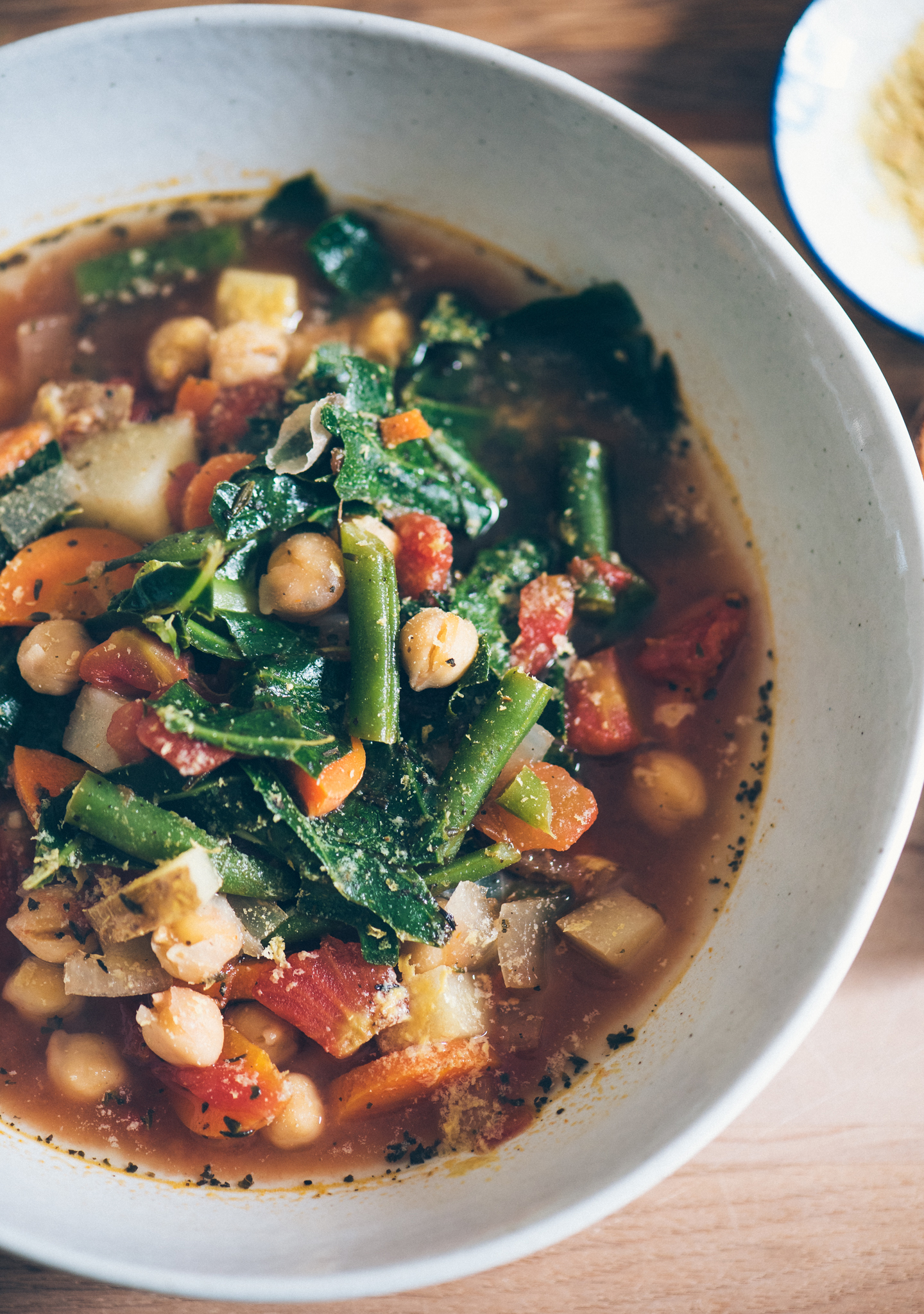
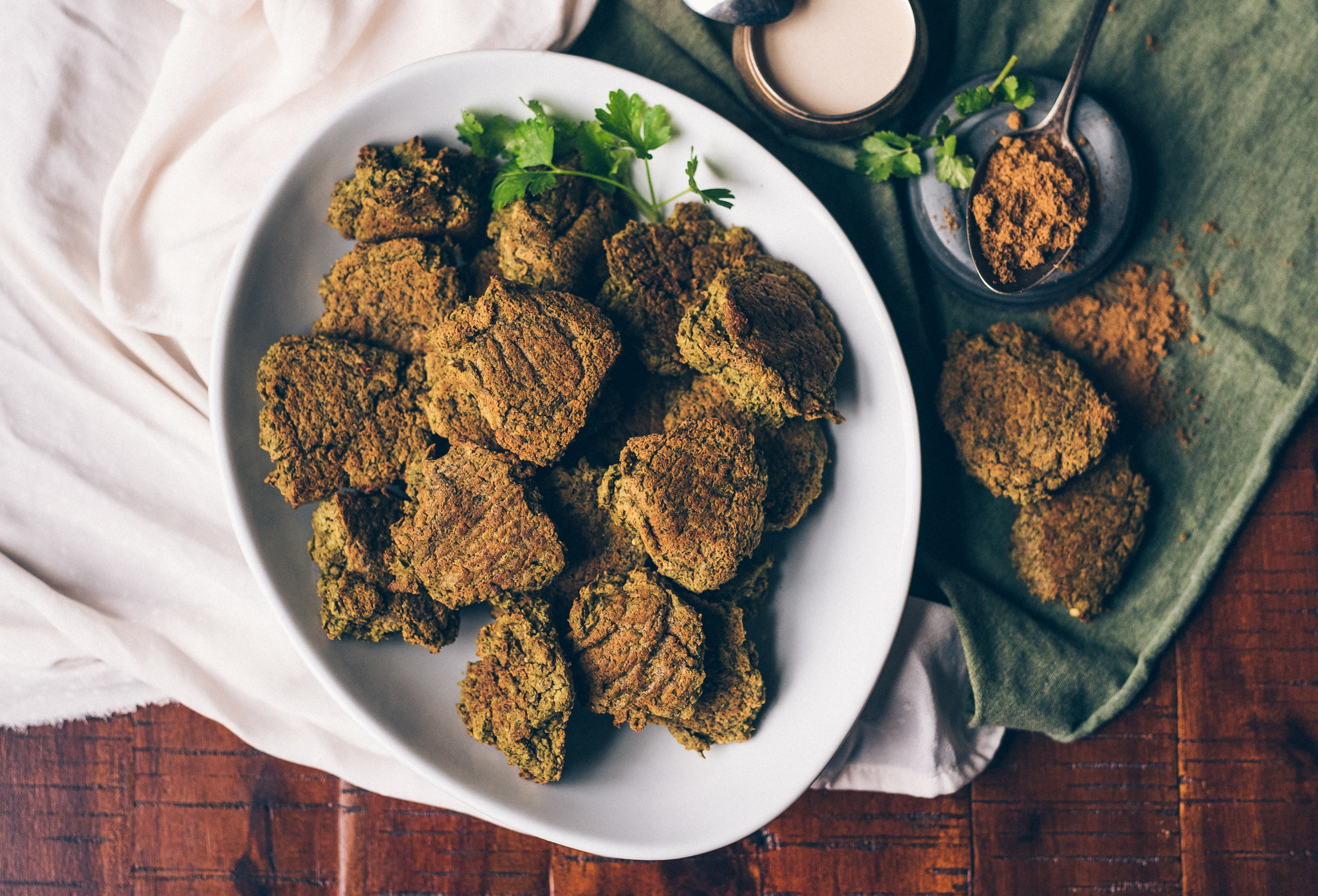
As I mentioned in one of my more recent recipe posts, beans are a staple in my diet and one of my favorite ingredients to utilize. There’s just so much you can do with them! A few days ago, I was craving something hearty, so I decided to make a stew. I had to choose from several varieties of beans I hand on-hand, and being unable to decide between lentils and chick peas (two of my favorites), I decided to combine the two in order to make a delicious bean, vegetable, and spice-filled stew. The stew was just as warm and hearty as I desired and even tastier than I expected. Enjoy alongside your favorite grain, or a nice crusty bread.
Two Bean Stew
-1 15.5 ounce can of lentils, drained (or 1 1/2 cups cooked lentils)
-1 15.5 ounce can of chick peas, drained (or 1 1/2 cups cooked chick peas)
-1 carrot, sliced
-2 celery stalks, diced
-1/2 can diced tomatoes
-1 potato, chopped
-1 large onion, chopped
-2 cloves garlic, minced
-1/2 tsp. oregano
-1/2 tsp. cumin
-1/2 tsp. paprika
-1 tsp. garlic powder
-2 Tbsp. olive oil
-1/2 tsp. salt
-3 Tbsp. soy sauce
-2-4 cups of water (depending upon how thick and hearty you would like the stew)
-Pepper, to taste
In a large saucepan, heat olive oil over medium-high heat. Add carrot, celery, garlic, onion, and potato. Add spices and salt. Stirring frequently, saute for 8-10 minutes until onions are tender. If vegetables begin to stick, add a few Tbsp. of water.
After 8-10 minutes, add beans, water, and tomatoes. Turn up heat and bring to a boil. Reduce heat and let simmer for at least 15 minutes. Stir in soy sauce. Remove from heat, and season to taste with pepper.

Photo from http://progresspr.wordpress.com
Whole Foods has always been known as a grocery store for the health conscious. Packed with an array of organics, colorful produce, healthier junk food alternatives, and wonderful nutritious items like kombucha and kabocha, Whole Foods is often the go-to store for foodies and health enthusiasts alike.
However, prices can be a tad on the high side, which is apparent from the majority of customers who shop there. For instance, the scene in Philadelphia’s Callowhill Whole Foods is much different from the strapped-for-cash North Philly residents and students who fill Progress Plaza’s Fresh Grocer.
While Whole Foods may not be lowering their prices anytime soon for regular customers, CEO John Mackey recently launched a program that offers special benefits to their employees in addition to the 20% discount they already receive. In the new initiative, titled “Team Member Healthy Discount Incentive Program”, employees can become eligible to receive as much as a 30% discount on grocery purchases.
That’s a deal I wouldn’t want to pass up. Although I’m not a Whole Food’s employee, if I were, a 30% discount would allow me to replace some of my Fresh Grocer groceries with more of Whole Food’s gourmet products, without going broke.
However, not all employees will be lucky enough to receive this special discount, particularly if they aren’t in the “health-conscious” category of Whole Foodies. Here’s how the program works: Employees who decide to enter the program will be screened for blood pressure, cholesterol, body mass index (BMI), and smoking. Based on the results, employees will be ranked and placed into categories of either platinum, gold, silver, or bronze. Platinum candidates, being the most fit employees, will receive a 30% discount on groceries. Those who fall into the bronze category will receive a 22% discount. Whole Foods worked closely with their Scientific and Medical Advisory Board to determine the specific category requirements.
The program encourages employees to make healthy choices and cultivate a healthy lifestyle, some of the core principles that Whole Foods embodies. This would also help Mackey decrease the company’s $150 million health care costs.
To me, this sounds like a plan that more companies should acquire. These kind of initiatives help to not only decrease individual companies’ health care, but decrease our nation’s overwhelming cost of health care while promoting health among our citizens. Rather than spending money on feeding workers doughnuts and coffee during coffee breaks, why not put the money towards healthy initiatives for employees? Seems like a win-win situation to me.
Research suggests that approximately 2 out of every 3 runners bear an injury in any given year. As a runner myself, I’ve been through my fair share of injuries: Ankle problems, stress fractures, and my new current annoyance, a knee problem.
Injuries can arise from any number of reasons. Several main reasons include wearing improper footwear, nutrition deficiencies, muscle weaknesses, and training mistakes, such as running on hard surfaces, increasing mileage or speed to quickly, and not allowing the body enough time to rest.
I’ve probably struggled with a combination of these issues, but particularly lately, the city surfaces I have been running on have just been too hard.
Running is a high-impact activity, meaning a lot of stress is placed on the bones and joints. This can actually benefit the body, such as by strengthening the bones and increasing one’s bone mineral density. However, if not careful, running can take a heavy toll on joints and ligaments. For example, running day after day on hard surfaces, such as concrete sidewalks and pavement, exaggerates the stress of the impact on the body. Additionally, unvaried surfaces drive this exaggerated stress to repeat itself with every step.
So what should you do if you acquire an injury as a runner? Your best bet is to stop running altogether for a period of time in order to let the injury fully heal. However, I know from experience just how hard this can be for avid runners! Running is one of those activities that goes beyond just the actual exercise. The feelings you can obtain from running are often unsurpassable.
BUT there are alternatives that can be comparable to running if you allow yourself to go into them with an open mindset and willingness to let your body heal. If your injury isn’t too serious, you could continue running at a decreased intensity and reduced distance. However, I’ve done this method of healing before, and even if it doesn’t end up exacerbating the problem (which it often does), it usually makes the injury take a lot longer to heal than if you just laid off of running for a little.
An injury is your body’s way of telling you that you need to slow down and give yourself time to heal. Our minds don’t always want to listen to our bodies, but for best results, we should tune into our bodies and follow their natural advice. If you acquire an injury, use the time to nurse yourself back to optimal health, and maybe even break an addiction and find a better sense of balance in the meantime. Once you return to running, not only will you feel refreshed and regenerated, but you may have acquired some new hobbies/passions in the meantime!
If you choose the path of taking a break from running or even decide to continue running at a reduced intensity upon becoming injured and want to add some additional cross training into your regiment, consider the following options:
- Swimming- Swimming is an incredible low-impact cardio workout. Through swimming, you can achieve aftereffects comparable to a runner’s high. It is also highly beneficial in toning the core region.
- Biking- Biking builds up muscles in the hamstrings, glutes, and muscles areas around the knee. Biking will keep your legs in shape for when you can return to running. It will also tone areas that may often be missed from running alone. Similar to running, this activity can be taken indoors or outdoors. Particularly in the winter, if you are a treadmill fan, try a stationary bike. Unlike on the treadmill, you more easily be able to flip through a magazine while you ride, allowing the time to pass right by you.
- Yoga- Yoga is a wonderful healing practice, perfect for nursing any kind of injuries back to health. Yoga will not only help to stretch and tone all areas of the body, gearing your body back up for running, but it will also enhance you mentally for when you decide to return to running. The meditative aspects of yoga can train a runner’s mind to be able to increase endurance and ease while running. Deep breathing during yoga can also be utilized in order to focus your mind on healing a particular area and mentally sending your breathe to that area for rejuvenation.
- Elliptical- While the elliptical machines at the gym will rarely compare to a run for most running enthusiasts, it will work to efficiently tone the glutes, quads, and calves, without putting much stress on the joints. This activity will also elevate the heart rate, so if you’re an injured runner craving cardio, the elliptical may be for you. If you do find it boring, try skimming a magazine or watching TV while circling those legs, and always remember that you’re doing your body well by allowing it to properly heal.
- Aqua jogging- Just like running, but in water, aqua jogging allows you to receive many of the benefits of running without placing much stress on the legs. The plus to aqua jogging is that you’ll feel like you’re actually running. The downside is finding a location to do it.
Allowing your body to heal is important. If you are in pain, stop and listen to your body. While this can be quite
difficult to do especially when running becomes a habit, continuous running on an injury can do more harm than good. It’s much more worth it to take a small break from running than to keep running and develop an injury for life. Plus, running with an injury is never as emotionally lifting and mind-easing anyways. When you think you are ready to start running again, ease yourself back into it by starting slow and running moderate distances. How will you know when you’re ready to start back up? Bryan Whitesides of injuredrunner.com says: “I give the single leg hop test. Stand on one leg and hop 30 times. When you can do that without pain, you’re ready to start running.”
I got an email sent to me a couple days ago from an Integral Yoga Teacher’s Association in which I belong to. I usually skim over these emails or save them with the intention of reading them later but often end up failing to do so, which is terrible because they always offer wonderful words of wisdom. I decided to open up this past newsletter and make myself slow down and take the time to read it. Many of the emails actually often include reminders to slow down and enjoy life, which is something me and pretty much everyone can and should make a conscious effort to do more than every once in awhile. Anyways, I’m really glad I took the time to read this particular email in whole. It really resonated with me. I thought I’d share what it had to say with all of you. A little food for thought for your day/week/life.
——————————————————————————————————————————————-
Dedicate Your Entire Life
“Selfishness is the cause of all worries and anxieties. The minute
you raise above selfishness, the minute you learn to dedicate your
entire life, you will be peaceful and happy. When the mind is healthy,
the body should be healthy. There’s nothing to disturb the body.
Every cell in the body, every gland in the body reacts to your
thinking, remember that. If the mind is calm and clean, you are
healthy in every way. As the mind, so the body: a sound mind in a
sound body. That is why I say, if you want to call yourself a yogi,
see that your life is completely selfless, free from all kinds of
personal motives and attachments. Free yourself, liberate yourself
from that bondage.
“God bless you. OM Shanti, Shanti, Shanti.”
-Sri Swami Satchidananda, Integral Yoga
What this has to say is incredibly true. If you free your mind from worries, anxiety, and tension, you allow your body to work at its optimum state. Your body can function at it’s best, while your mind rests at peace. Example (this will be geared towards foodies): You overeat one day. Your mind is racing with guilty thoughts. Even if your body wouldn’t be feeling the results of the overeating, your mind is making it feel the results. Your mind is also placing stress on the body. A stressful mind increases the chances of becoming sick, thus resulting in an unhealthy body.
This example could be continued, and there are a million other examples that could be related to this. Maybe think of one that’s happening in our own life? Serve others and you will not only make others happy, but you will find natural happiness within yourself. Live, serve, and be free…the keys to a happy life.
Growing up, rice and beans was always a staple in my house. We would eat various kinds of beans at least two or three times a week, paired alongside brown rice or occasionally some other random grain. Since moving out, I’ve carried on the tradition of making beans and rice, and typically still end up eating this duo a few times a week due to the amount of leftovers my usual pot of beans provides. Beans provide a hearty, protein-filled ingredient and are especially perfect for college vegetarians. They’re super cheap and can be made into a super tasty meal without the need of any meat. The best part is, beans can be whipped up in no time and take little culinary skills to make.
Below is a rendition of one of my go-to bean dishes. Feel free to eyeball the ingredients (which is what I typically do) or experiment with different veggies and spices, or let my recipe be your guide. I like to pair the beans with a grain or squash, along with some salsa and maybe some cilantro.
Grace’s Vegetarian Black Beans
(Serves 3-4)
-1/2 large onion, diced
-1/4 green pepper, diced
-2 cloves garlic, minced
-1 15.5 0z. can black beans, drained
-1 cup button mushrooms, sliced
-1/2 can no-salt-added diced tomatoes, with 1/2 the juice
-1 scant tsp. chili powder
-1/4 tsp. coriander
-Salt and pepper, to taste (I typically do around 1/4 tsp. salt)
-Olive oil
-Cilantro, optional
-Salsa, optional
Heat large saucepan on medium heat. Coat pan with olive oil. Add onions, garlic, and peppers and saute for 5 minutes. Add mushrooms, spices, and salt and pepper and saute another 2 minutes. Add beans and tomatoes. Reduce heat to low and simmer for at least ten minutes. Remove from heat, and top individual portions with cilantro and salsa, if desired.
Listen up fellow Philadelphians! The City Council of Philadelphia, a city ranked as one of America’s fattest, has finally passed a law requiring chain restaurants and retail food establishments to list calorie counts.
As of this coming Monday, February 1st, chain restaurants and retail food establishments with 15 or more locations nationwide will be required to list the calorie counts for foods on their menus. Starting April 1st, they will also be required to provide information on the saturated fat, trans fat, carbohydrates, and sodium content of the menu items.
There is much speculation as to whether this will actually induce people to eat less calories. A study done in New York City, the first place to mandate calorie listings, showed that calorie listings had little effect on consumers. So will the listings be enough to bail out Philadelphia from being one of the fattest cities in America? In short, probably not. Calorie listings won’t be required for mom and pop restaurants or individual restaurants, which often serve higher quality food than chain restaurants but that is often just as fatty and calorie-heavy.
However, hopefully it will be the first step in bringing awareness to just how unhealthy the typical fast food/chain restaurant meal is. While I almost never go to a chain restaurant, I am happy to see that now if I do decide to venture to one, I’ll be able to use the listings to make wiser decisions. As obesity continues to become a pressing and prevalent issue across America, hopefully citizens at least in the city Philadelphia will actually start to use the information placed right in front of their face to make healthy food choices.
Along with Philadelphia, New York City, California, Oregon, Maine, and Massachusetts have also passed menu labeling ordinances.
Would calorie listings keep you from ordering certain items off the menu? Do you use eating out as an excuse to splurge and allow yourself to eat whatever you want?
Take a look at some of these astounding nutritional facts from some of the nation’s top chain restaurants.
McDonald’s: Cheeseburger with medium fries = 680 calories, 31 grams of fat, 43% saturated fat, 41% sodium
Subway: Foot long chicken bacon ranch sub = 1080 calories, 50 grams of fat, 100% saturated fat, 60% cholesterol
KFC: Chicken breast with side of mashed potatoes and gravy = 1,160, 59 grams of fat, 75% saturated fat, 57% cholesterol, 140% sodium
Chili’s: Boneless buffalo chicken salad with a side of their famous chili with cheese = 1,370 calories, 90 grams of fat, 130% saturated fat, 168% sodium
I stumbled upon making this variation of oatmeal just this past fall when my local Trader Joe’s was having a sale on pureed pumpkin. I took some of the canned pumpkin home and then contemplated the numerous ways I could use it. While I love pumpkin pie, the holidays were coming up and I had already been stuffing myself with treats, so I decided on whipping up a healthier kind of treat: Pumpkin Oatmeal. The addition of pumpkin to the standard bowl of morning oats turns this breakfast into a hearty, extra creamy and nutritious delight. Enjoy.
Pumpkin Oats
(Serves 1)
-1/3 cup of old fashioned oats
-1/3 cup of pumpkin puree
-2/3 cups of water or milk/soy milk/almond milk, or a combination
-Dash of cinnamon
-Brown sugar, to taste
-Salt, to taste
Add the first 4 ingredients to a saucepan and bring to a boil. Reduce to a simmer, and cook until oats reach desired consistency (about 8-10 minutes). Remove from heat and place in a bowl. Sprinkle with brown sugar and salt.
Check out the interview done by thepuddingweekly.com that features me and my blog.
I have talked about my hate of public school lunches before (see this article for more info.). The typical school lunch consists of: Main dish- Some kind of greasy, low quality meat product; Beverage- Your choice of milk, plain or sugar-filled chocolate or strawberry milk (in my school, you had to buy water unless you were lactose intolerant, meaning as a person who tries to stay away from dairy as much as possible, I’d spend a lot of dollars on bottled water until I started thinking ahead and packing my own in a reusable bottle); Vegetable/Fruit- Almost always frozen or canned in some sugary syrup, or a taste-like-cardboard red delicious apple; Dessert/Snack- More fat, either in the form of potato chips or some version of Twinkies. None of this speaks of health to me.
How are we supposed to teach our kids healthy eating habits in school when they are being fed CRAP in the very institution that teaches them against it? How are parents to ensure that their kids eat healthy when schools often serve every health-conscious adult’s nightmare?
Until something changes, these questions are hard to answer. School lunches are filled with processed, chemicalized,
and purely unhealthy foods. The best option is to pack your kids’ lunch or buy healthy food that tastes even better than the junk they’re fed at school to prompt the kid to want to pack their own lunch. This is what I did all throughout high school, but I was one of few. The rest of my friends didn’t prioritize a few minutes in the morning to gather a lunch together, so they’d suffer through the repulsive school lunches they were served day after day. What makes school lunches even worse is the fact that even though they are fatty, greasy, salty, and sweet, the perfect combination to make foods taste good, they still often taste like crap. This totally goes against my philosophy of if I’m going to eat something unhealthy, it better be darn good. I’d regularly hear my friends complain about how fake the mashed potatoes tasted or how horrible the hamburgers were or how slimy the lunch meat was, but they’d shove those substandard, artery-clogging foods down their mouths anyway because they were hungry. School food is at the bottom of the totem pole when it comes to quality, meaning that even the fat and salt is often not enough to make it taste good.
What sparked this ranting post about how terrible school lunches are was an article I read about a teacher in the mid-west who plans on eating her school’s lunch everyday for the next year. She will be blogging and photographing the lunch everyday. Stop by her site and check it out. I stopped by and immediately noticed a conglomeration of the type and quality of food I mentioned above: Pizza, canned pineapple, a red delicious apple, horrid looking tater-tots, puke “green” green beans, Salisbury “steak” that look like it was sitting in a pile of some kind of grease (or maybe that was just a greasy sauce), pretzels, a lifeless burger, etc. etc.
I have to say I was surprised I didn’t see more bags of chips and imitation tasty-cake desserts, but there’s still numerous months left in the year. I think the teacher is certainly a little daring in doing this. For one, I don’t think I could ever go back to eating school lunches. Also, she’s bound to gain a little weight, particularly if her former lunches were on the healthier-side. Even if she doesn’t gain too many pounds, she’s definitely taking a toll on her health. I love the idea though and think it makes a great topic for a public blog.
Hopefully her experience will help raise more awareness about the issue of school lunches and the terrible quality that they encompass. Congress is expected to discuss and hopefully improve child nutrition programs this spring. These public officials are long past grade school years, so I think it could do them some good to take a look at this teacher’s blog and remind them of how terrible school lunches are. I’m sure they know that school lunches aren’t healthy, but take a look at these pictures, and anyone can see just how lifeless school lunches really are. Especially if you have kids, take a look, and if you don’t already, you may just want to start packing your kids’ lunches.
Pomelos are my new favorite treat. I tend to generally eat a lot of citrus during the winter months, such as oranges, clementines, and grapefruit since my other favorite fruits aren’t in season. My roommate eats a lot of fruit as well, and so a couple weeks ago she brought home what I surmised was a gigantic grapefruit. I told her I had never seen a grapefruit that big! That’s when she told me, “It’s not a grapefruit silly. It’s a pomelo,” introducing a whole new and delicious citrus fruit to my winter diet.
Pomelos look and taste similar to grapefruits, with subtle differences. For one, they’re much larger in size. Pomelos are the largest citrus fruit, although I must admit that half of this size difference is due to pomelos’ thick skin. The taste is similar to that of a grapefruit but is a tad sweeter and milder. The texture slightly differs as well, as it is a bit coarser containing a bunch of little juicy beads that pop in your mouth.
While some might argue that pomelos aren’t worth buying because they’re a tad pricy (the price depends upon where you buy it, but definitely priced higher than regular grapefruit), I find their size and sweet grapefruit taste quite intriguing. I’ve advocated this policy before but once again, I’d rather spend my money on a delicious and unique fruit than a shoddy dessert. The size and mysteriousness of a pomelo makes me excited about munching on a fruit.
If you decide to splurge on a pomelo, choose one on the heavier side. These tend to be jucier and sweeter. And if you decide you want to get creative, try candying the rind.